Starting a gym sounds simple. Find a space, buy some equipment, sign a few members, and you’re running. In practice, the gap between a club that folds within a year and one that’s still growing years later is mostly preparation. If you know up front who you want to serve, what it really costs and which rules apply, you make better calls when the pressure is on. This is an honest step-by-step plan for opening a gym in the Netherlands. No promises about getting rich quick. Just a concrete look at the choices you make early and the mistakes they prevent. We’ll cover your concept and target group, the business plan and the numbers, the real start-up costs, location and permits, the legal side, from registering with the KvK (the Dutch Chamber of Commerce) to insurance, choosing your software, and winning your first members. It works for a first gym of your own, a PT studio, a Hyrox or functional box, or a mixed concept. The broad lines are the same for all of them. Where it matters, we point out the difference.
Choosing your concept and target group
Before anything else, decide what kind of club you want to be. It sounds obvious, but plenty of starters skip it and end up with whatever concept fits the first space they find. Do it the other way round. Concept first, then a location that suits it.
A low-budget gym with lots of equipment and little guidance earns money differently from a small PT studio where you’re paid per program. A Hyrox or functional box runs on group energy and fixed-schedule classes. A mixed concept serves several target groups at once, so it needs a broader offering and more organization. Each type attracts different members, needs different space and has its own cost structure. The sharper your choice here, the easier every later choice gets.
Make your target group concrete. Not “everyone who wants to work out,” but something like this: people in their thirties and forties who want structure and guidance and will pay for it. Or young athletes who mostly care about price and opening hours. Describe their budget, their motivation and when they want to train. That profile sets your price, your opening hours, your layout and even the tone of your communication.
- Low-budget gym: lots of equipment, limited guidance, runs on volume and a low monthly price.
- PT studio: small scale, personal guidance, higher price per program or per hour.
- Hyrox or functional box: group classes, fixed schedules, a strong community as the glue.
- Mixed concept: several target groups, a broader offering, more organization and planning.
The business plan and the numbers
A gym business plan doesn’t have to be a book. You need it to keep yourself honest and, if you’re looking for financing, to convince a bank or investor. It forces you to turn assumptions into numbers and to see whether the concept can add up at all.
The core is your break-even: how many members or programs do you need to cover your fixed costs? Add up rent, energy, insurance, software, depreciation on equipment and any staff. Divide that by your average monthly revenue per member. The result is your floor, and it’s often higher than starters expect. Then don’t stop at the optimistic scenario. Work out a version where sign-ups disappoint and the first months are slow.
Build the ramp-up phase into your plan too. Most gyms run at a loss in the first months, because the fixed costs are already running while the member base is still growing. Keep a buffer for at least the first six to twelve months, so a slow start doesn’t knock you over.
- Calculate break-even: fixed costs divided by average revenue per member per month.
- Run three scenarios: cautious, expected and optimistic, not just the best case.
- Plan a ramp-up buffer of six to twelve months of fixed costs.
- Use realistic cancellation figures. Members leave too, especially after January.
What does it really cost to start a gym?
Everyone wants a fixed number here, and there isn’t one. Starting a gym can cost anything from a few tens of thousands of euros for a small PT studio to well over a hundred thousand for a spacious gym full of equipment. The difference mostly comes down to your concept, your location, and whether you buy new, buy used or lease.
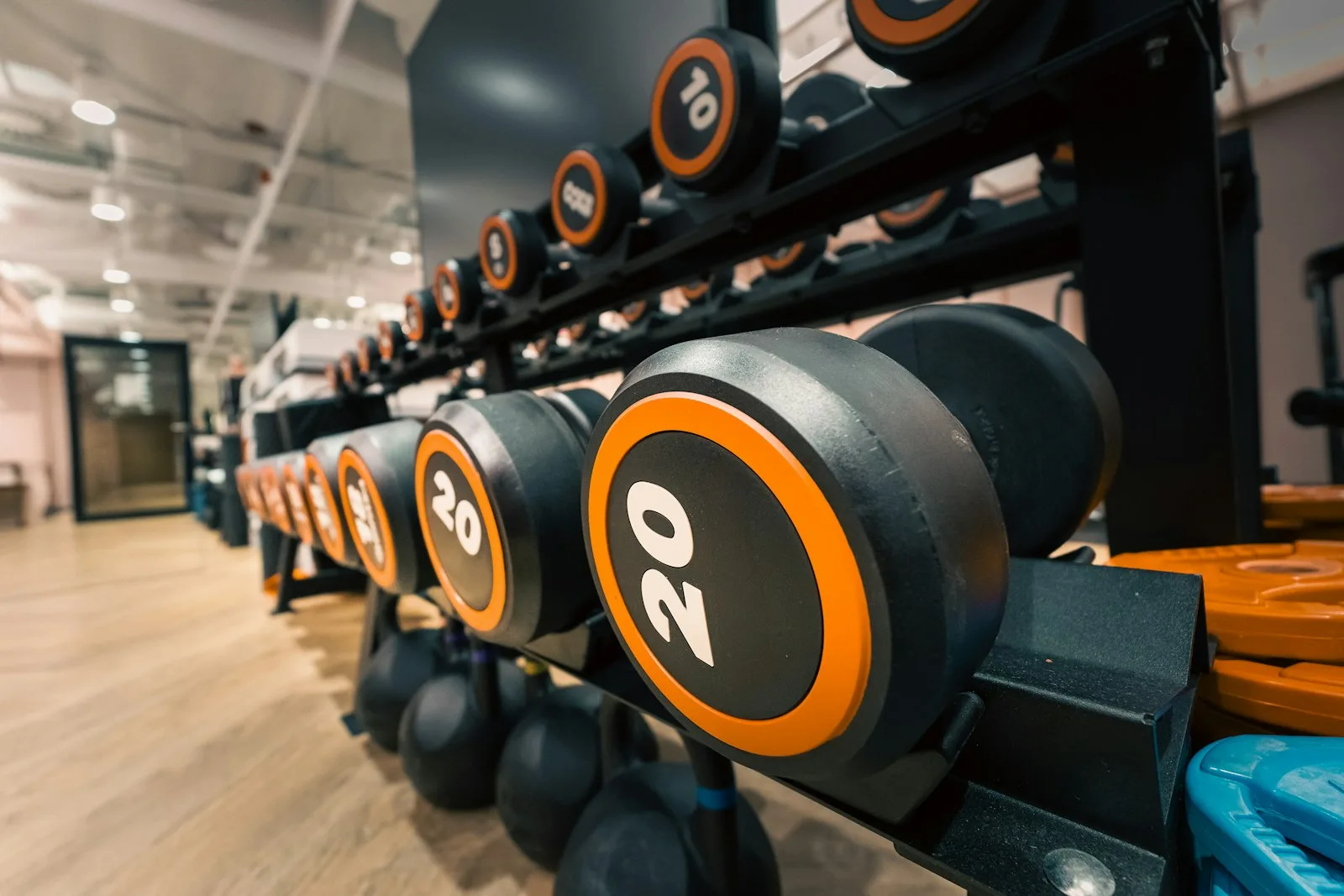
The biggest items are the fit-out and equipment, the rent and any renovation, and your fixed monthly costs. Equipment is often the heaviest investment. A fully equipped strength area needs a sizable budget, while a functional or PT studio with barbells, rigs and free weights can start for less. Used equipment or a lease lowers the initial investment, but raises your monthly costs or your maintenance risk.
Don’t forget the smaller recurring costs. Together they add up fast: insurance, software for member management and direct debit, cleaning, energy (a gym uses a lot), marketing and your own living expenses during the ramp-up. That last one is the one people underestimate. Many starters work out the investment and forget that they, too, have to make ends meet for months before the business turns a profit.
- Equipment and fit-out: modest for a PT studio, the biggest item for a strength gym.
- Rent and renovation: depends heavily on location, floor area and the condition of the building.
- Fixed monthly costs: energy, insurance, software, cleaning and maintenance.
- Ramp-up and living expenses: set money aside for the months before you reach break-even.
- New, used or leased: decides whether you spend up front or spread the cost out.
Location, permits and layout
Your location is one of your biggest decisions, and hard to undo. Look at accessibility, parking, visibility and the neighborhood. Does your target group match the people who live and work there? A PT studio can get by with a smaller, quieter space. A gym with group classes needs room, height and good ventilation.
Before you sign, check that the zoning of the building allows sports use. Not every commercial building can simply become a gym. The municipality’s zoning plan (bestemmingsplan) decides that. Ask the municipality, and get the answer in writing. Depending on what you want to offer, you may also need an environmental permit (omgevingsvergunning) for a renovation, and you’ll face noise and fire safety requirements, plus rules for any bar or hospitality-style facility.
In the layout, safety matters as much as looks. Think shock-absorbing floors, enough escape routes, inspected fire extinguishers, first aid supplies or an AED, and a logical route through the gym. Design around how members move through the space, not just how it looks in photos. A safe, sensible floor prevents accidents and keeps things calm at peak times.
- Check the zoning plan with the municipality: can the building be used as a gym?
- Plan for an environmental permit when renovating, and for fire and noise requirements.
- Assess accessibility, parking, visibility and whether the neighborhood fits your target group.
- Lay out for safety: escape routes, fire extinguishers, AED, shock-absorbing floors.
KvK registration, insurance and regulations
Before you open, you need the legal basics in place. You register your business with the KvK (the Dutch Chamber of Commerce) and choose a legal form. Many starters begin as a sole proprietorship (eenmanszaak) because it’s simple, but a private limited company (bv) can make sense once your liability or investments grow. Get advice from an accountant or lawyer, because the choice affects your taxes and your personal risk. Registering gets you a VAT number, and you set up your bookkeeping. Sport also has a separate VAT rate in the Netherlands, so find out what applies before you set your prices.
For a gym, insurance isn’t a formality. It’s a must. The most important one is business liability insurance, because your members push themselves physically and can get hurt. On top of that you’ll often want inventory or building insurance for your equipment and premises, legal expenses insurance and, if you hire staff, sick leave and employer liability insurance. Match the coverage to your concept and your risks, and read the policy terms carefully.
Finally, the rules around members and data. Use clear general terms and conditions and membership terms. The Netherlands has firm consumer rules on notice periods and automatic renewal. And because you process members’ personal data, the GDPR applies to you: you record which data you keep, why, and for how long. Good software helps, but the responsibility stays with you.
- Register with the KvK and choose a legal form deliberately (sole proprietorship or bv).
- Take out at least business liability insurance, and add cover based on your risks.
- Draw up general terms and membership terms that follow the consumer rules.
- Sort out your GDPR obligations: which member data you keep, what for and how long.
Choose the right software from day one
Many starters only sort out software once things get busy, often with a pile of separate tools: a scheduler here, a direct debit link there, a spreadsheet for the member list. That works for a while. Then it gets messy as you grow, and switching takes far more effort than choosing well at the start.
Don’t look at price alone. Look at what you really need: member management, memberships and direct debit, a schedule for classes or appointments, access management, and a clear view of your numbers such as revenue, sign-ups and cancellations. The more of that lives in one system, the less you have to jump between tools and the fewer errors creep into your records. The buyer’s guide to club software walks through the criteria that really matter.
ClubGround keeps member management, membership fees, schedules and your numbers in one system, whether you run a gym, a PT studio, a box or a mixed concept. Whatever you choose, check that it grows with your plans, so a second location or a new offering doesn’t force a migration.
- The minimum you need: member management, memberships, direct debit, schedule and numbers.
- One system over separate tools: less switching, fewer errors, a better overview.
- Choose software that grows with your concept, so you don’t have to switch halfway.
- Make sure it handles direct debit, cancellations and GDPR retention periods properly.
Winning your first members
A beautiful gym without members is just fixed costs. So start marketing before you open, not after. Build a waitlist or a group of interested people through social media, your network and the neighborhood, so you’re not starting from zero on opening day. A pre-registration with a founding offer often works well: early members get a good price or better terms in return for their trust.
In the first months, local visibility and word of mouth are your strongest channels. Make sure people can find you on Google and on the map, ask your first happy members for reviews, and make it easy to bring someone along with a bring-a-friend offer. Here are the recruitment methods that really work.
And don’t forget that keeping members matters as much as winning them. A new member costs money to win, and it takes a few months to earn that back. Good onboarding, personal contact in the first weeks and a smooth process for payment and scheduling keep people around longer. So invest in member retention from day one. Spotting who’s about to drop off, and acting in time, saves more in the long run than any ad.
- Start marketing before you open, and build a waitlist or founding group.
- Focus on local visibility: Google, reviews, the neighborhood and word of mouth.
- Team up with local businesses. Referrals from them beat broad advertising.
- Invest in retention: onboarding and personal contact keep members longer.
Frequently asked questions
How much money do I need to start a gym?
It varies a lot by concept. A small PT studio can start with a few tens of thousands of euros, while a spacious gym full of new equipment can cost well over a hundred thousand. The biggest items are fit-out and equipment, rent and renovation, and your fixed monthly costs. Build in a buffer for the first six to twelve months too, because most gyms only break even after the ramp-up phase.
What permits do I need for a gym?
Start with the municipality’s zoning plan (bestemmingsplan): the building must be approved for use as a gym. Depending on your plans you may need an environmental permit (omgevingsvergunning) for a renovation, and you have to meet fire safety and noise requirements. If you offer hospitality or a bar, extra rules apply. Always check with your municipality before you sign a lease.
What software do I need when I start a gym?
At minimum you need member management, memberships with direct debit, a schedule for classes or appointments, and a clear view of your numbers. One system that combines these saves you from jumping between separate tools and keeps your records and GDPR retention periods in order. Choose software that grows with your concept, so you don’t have to switch when you add a location or a new offering.