All foods
Meat
Chicken breast
Chicken breast is lean and almost pure protein. That is why it appears in so many plans for fat loss and muscle gain.
In 1 fillet (150 grams)
180
kcal
33.8g
protein
0g
carbohydrates
3.9g
fat
Nutrition facts.
| Per 100 g | Per serving | |
|---|---|---|
| Energy | 120 kcal | 180 kcal |
| Protein | 22.5 g | 33.8 g |
| Carbohydrates | 0 g | 0 g |
| of which sugars | 0 g | 0 g |
| Fat | 2.6 g | 3.9 g |
| of which saturated | 0.56 g | 0.84 g |
| Fiber | 0 g | 0 g |
| Sodium | 45 mg | 67.5 mg |
| Potassium | 334 mg | 501 mg |
| Calcium | 5 mg | 7.5 mg |
| Iron | 0.37 mg | 0.56 mg |
| Vitamin C | 0 mg | 0 mg |
Serving: 1 fillet (150 grams). Source: USDA FoodData Central, carbohydrates excluding fiber as on a Dutch label.
Compared.
Almonds21.2 g protein · 579 kcalOats13.2 g protein · 379 kcalEgg12.6 g protein · 143 kcalBanana1.1 g protein · 89 kcal
Per 100 grams. Chicken breast: 22.5 g protein · 120 kcal.
Put it in a nutrition plan.
Build meals around chicken breast and other foods. Your members or personal training clients see what to eat each day, and how much.
See nutrition plans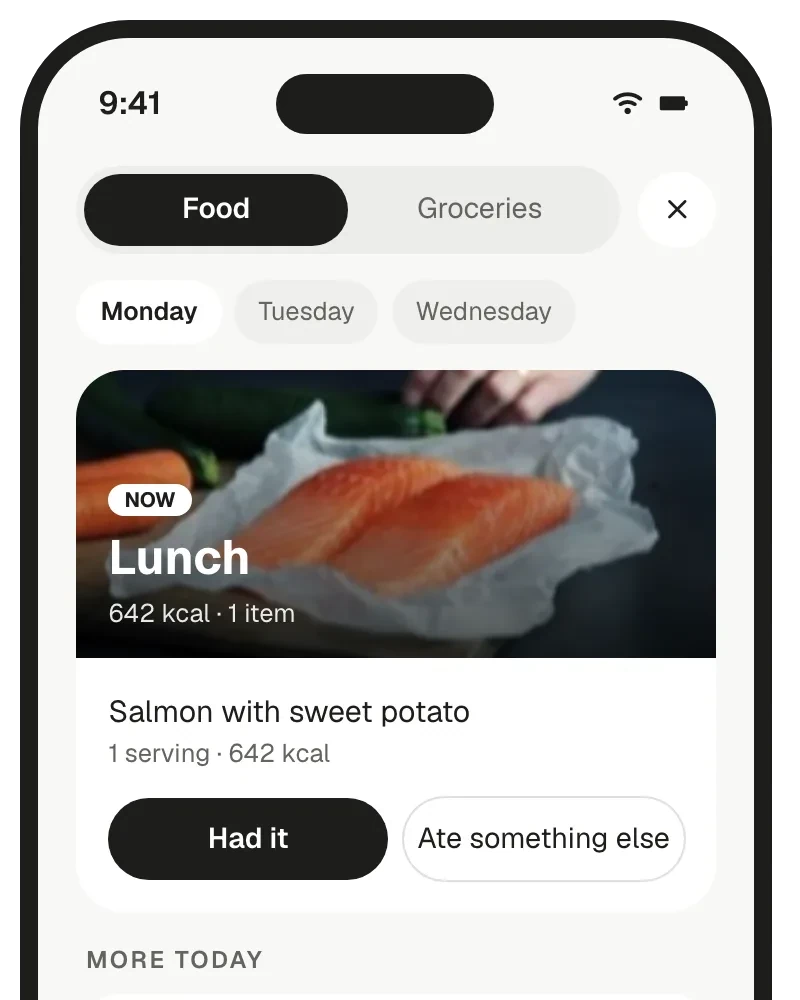
Common questions.
How many calories are there in chicken breast?
120 kcal per 100 grams. In 1 fillet (150 grams), that’s 180 kcal.
How much protein is there in chicken breast?
22.5 grams per 100 grams. In 1 fillet (150 grams), that’s 33.8 grams.
How many carbohydrates are there in chicken breast?
0 grams per 100 grams, including 0 grams of sugars, plus 0 grams of fiber.